Skip to content

Children’s Myopia Control in The Woodlands, TX

Your child’s vision plays a critical role in their learning, development, and overall well-being. Our eye doctors provide comprehensive pediatric eye exams to detect and address vision issues early, ensuring children have the visual skills they need for success in school and daily life. Many vision problems can go unnoticed because children may not realize their eyesight is not as clear as it should be. Regular exams allow us to identify potential issues before they affect a child’s education and quality of life. 

Our pediatric exams are gentle, non-invasive, and designed to be a positive experience, helping children feel comfortable and engaged during their visit. Using advanced diagnostic technology and a child-friendly approach, we evaluate your child’s eye health and vision at every stage of their development. 
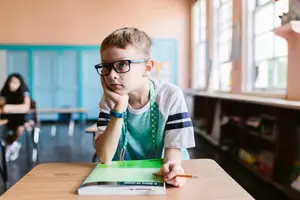
A boy with glasses in a classroom, holding a book and pencil, wearing a green and white shirt, and sitting at a desk, with a girl in the background, and a cabinet with shelves, and a window with blinds.
A young girl with glasses and ballet shoes is sitting on a table in a room with a glass window and sunlight shining on her

Beyond Your Child's Prescription

As a child's eye grows longer from front to back, distant objects become increasingly blurry. That change often leads to stronger prescriptions over time. While updated glasses can restore clear vision, they don't address the underlying growth that's causing those prescription changes.

Research has shown that higher levels of myopia are associated with an increased risk of several eye diseases later in life, including:

  • Retinal detachment

  • Myopic macular degeneration

  • Glaucoma

  • Cataracts

That's why many eye doctors now focus on slowing myopia progression during childhood, when the eyes are still developing.

Signs of Myopia Parents Should Watch For

Children don't always recognize when their vision is changing. In many cases, parents or teachers notice the signs first.

Common symptoms of progressing myopia include:

  • Squinting while watching television or looking at the classroom board

  • Holding books, tablets, or phones unusually close to the face

  • Frequent headaches or eye strain

  • Difficulty seeing distant objects clearly

  • Sitting at the front of the classroom, but still struggling to see

  • Declining interest in schoolwork or distance-based activities

  • Frequently rubbing their eyes

If you've noticed any of these behaviors, a pediatric eye exam can help determine whether your child's myopia may be affecting their vision.

A boy and a girl are looking at a globe with smiling faces
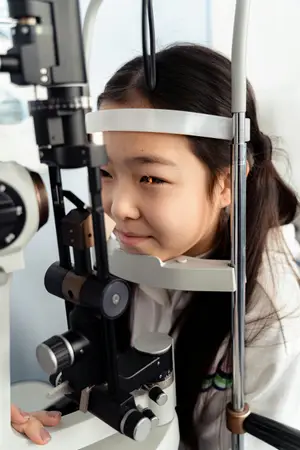
A young girl with long black hair is smiling and looking through a microscope with a white headband, while wearing a white lab coat and a ring on her left hand, probably in a laboratory.

What to Expect During a Myopia Consultation

You don't need to become an expert before your visit. That's what we're here for.

During your child's consultation, we will:

  • Review their prescription history

  • Discuss family history and risk factors

  • Evaluate visual habits, screen use, school demands, and daily activities

  • Perform a comprehensive assessment of vision and eye health

  • Discuss available treatment options and answer your questions

We don't just evaluate how clearly your child sees. We track how their eyes develop over time and gather the information needed to make informed decisions about future care.

Depending on your child's needs, we may use advanced diagnostic technology, including OCT imaging, to gather detailed information and establish a baseline for ongoing monitoring.

Our Myopia Control Options

The best myopia management plan is the one your child will actually wear and use consistently.

That's why treatment recommendations are based on factors such as age, prescription, lifestyle, and comfort level.

Orthokeratology (Ortho-K)

Orthokeratology uses specially designed contact lenses worn overnight while your child sleeps. These lenses gently reshape the eye's front surface, allowing clear daytime vision without glasses or contact lenses.

Pros

  • Clear daytime vision without glasses or contacts

  • Popular among athletes and active children

  • May help slow myopia progression

Considerations

  • Requires consistent overnight wear


  • Requires careful cleaning and lens hygiene

  • Adjustment period during the first few weeks

Best for: Active children, swimmers, athletes, or children experiencing rapid progression.

MiSight® Daily Contact Lenses

MiSight is an FDA-approved daily disposable contact lens specifically designed for children with progressing myopia.

Pros

  • Daily disposable convenience

  • Comfortable daytime wear

  • Designed to help slow myopia progression

Considerations

  • Must be worn consistently during waking hours

  • Requires children to be comfortable handling contact lenses

Best for: Children who want freedom from glasses during the day and are ready to wear contact lenses

Support Your Child's Vision for the Future

If your child's prescription continues to increase, now is a good time to learn whether myopia management may be appropriate.

We'll help you understand what's changing, what options are available, and how to create a plan that supports your child's vision as they grow. Request a consultation with Glimpse Eye Care - The Woodlands to get started.

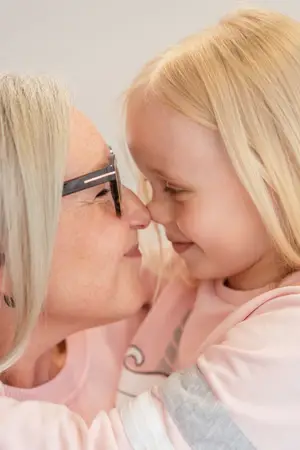
An adult woman wearing glasses is embracing a young girl with blond hair, both are dressed in pink clothing, the woman is wearing a gray earring, and they are standing in a room with white walls.

Myopia Management FAQ